A field-based journey where students question, observe, and interpret the past.
The Young Archaeologist is built around inquiry, evidence, and interpretation. Students examine clues, ask questions, and work with material evidence to understand how history is reconstructed.
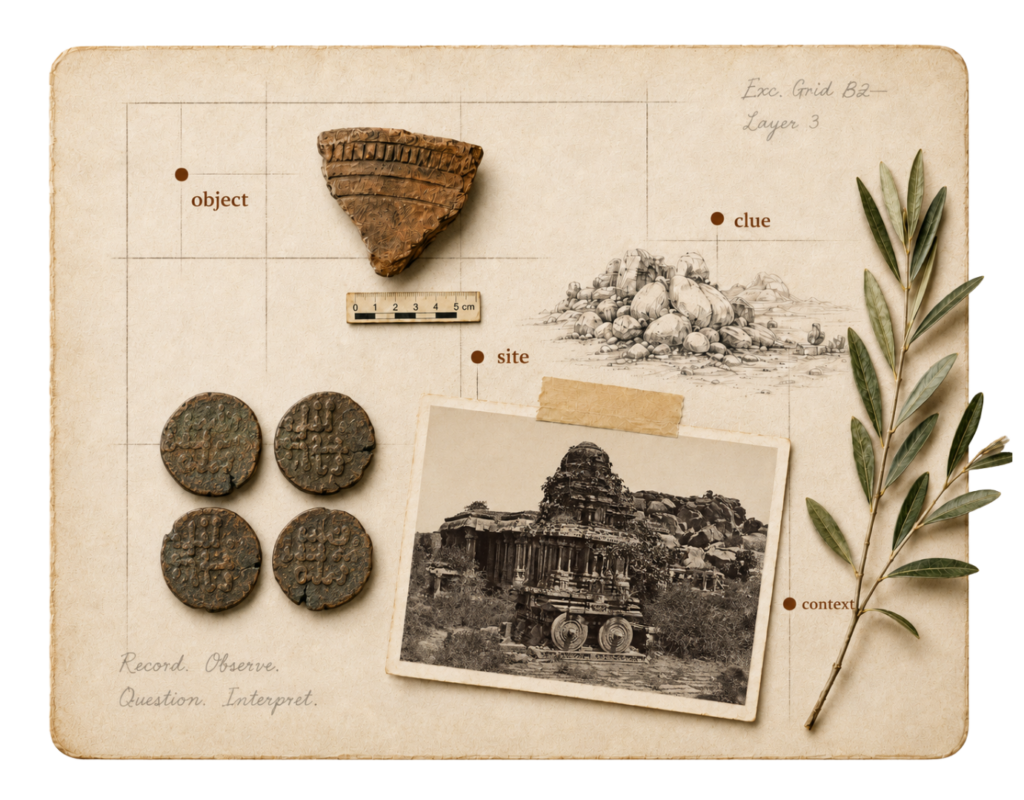
Students begin with questions and not conclusions
Artefacts, Sites, Living traditions and spaces are read together.
Students learn how meaning is built, not just what happened.
Students move between clues, sites, objects, landscapes, craft, and reflection, building their understanding through active investigation rather than passive sightseeing.
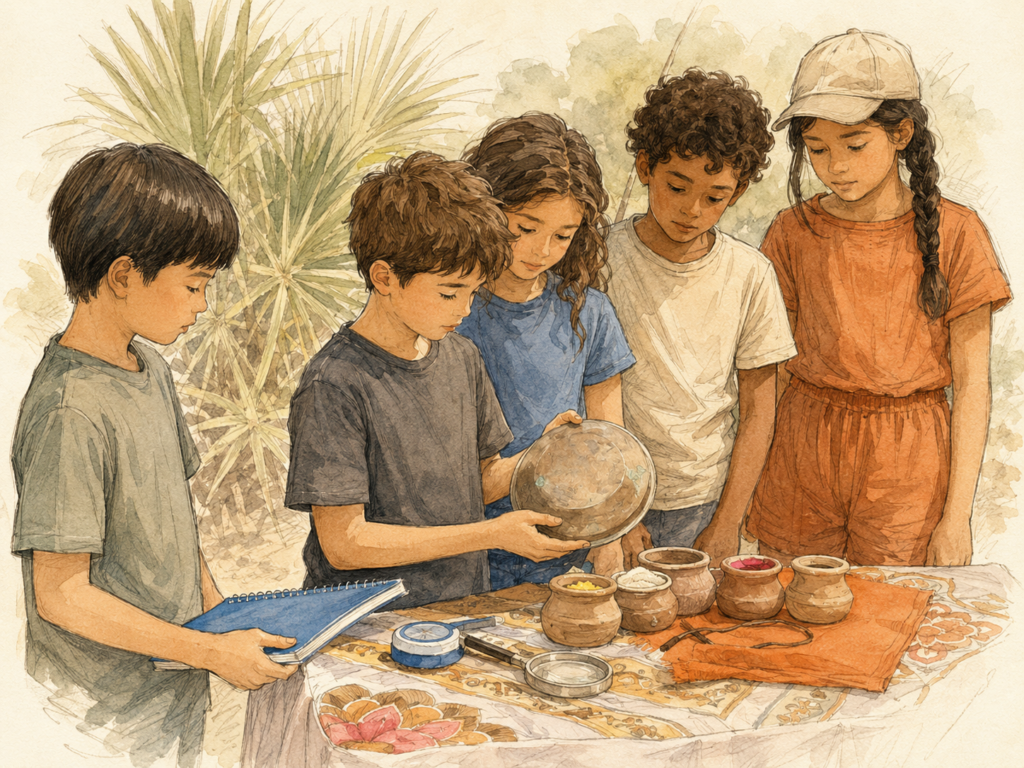
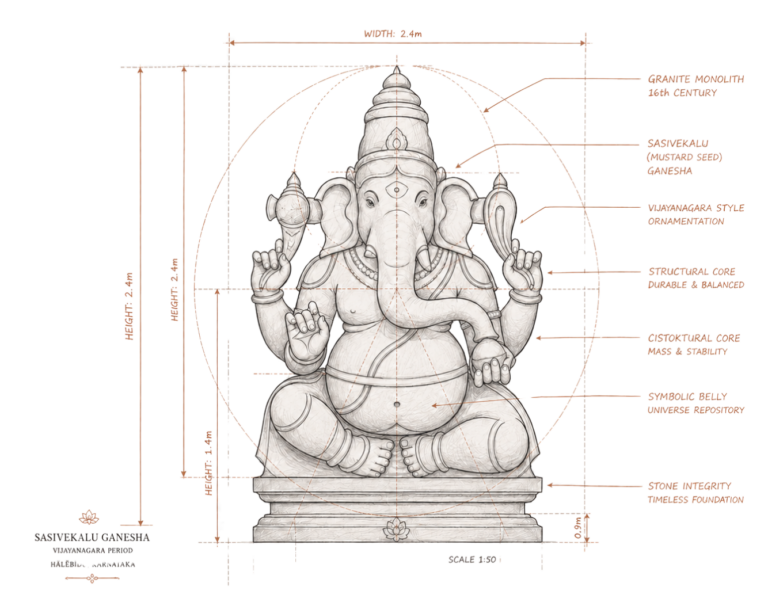
Students examine objects, materials, forms, and clues to understand what artefacts can reveal about people, place, and everyday life.
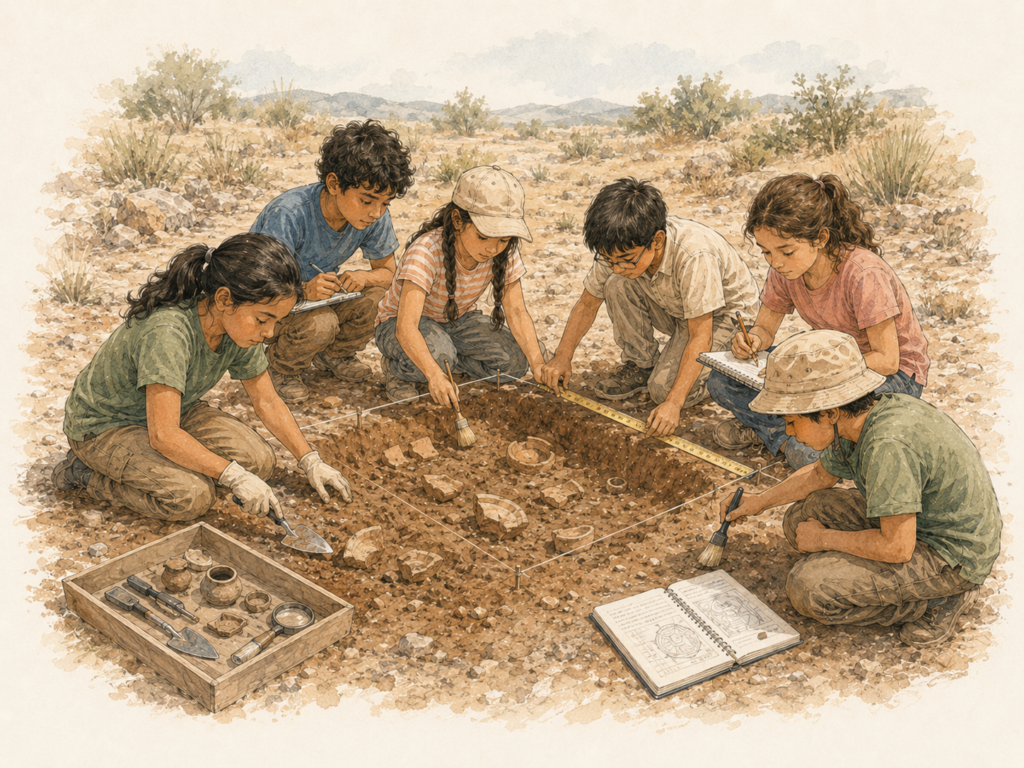
Students work in teams to uncover, measure, record, and interpret evidence from a simulated archaeological site.
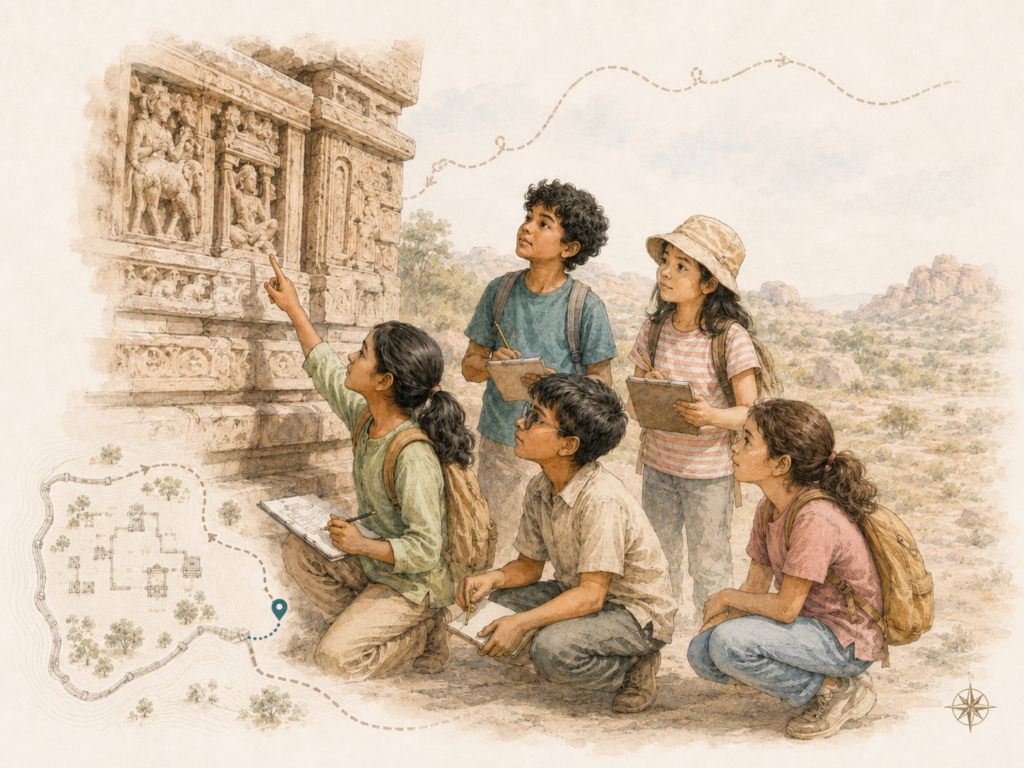
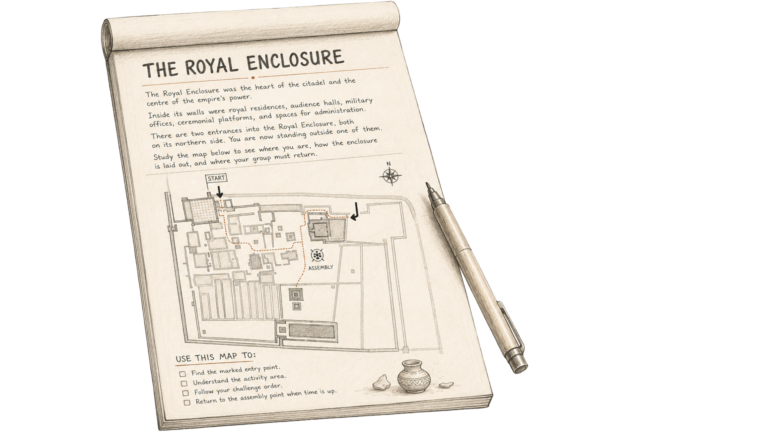
Through maps, scavenger hunts, guided walks, and panoramic viewpoints, students learn to read Hampi’s sites, city layouts, water systems, and landscapes.
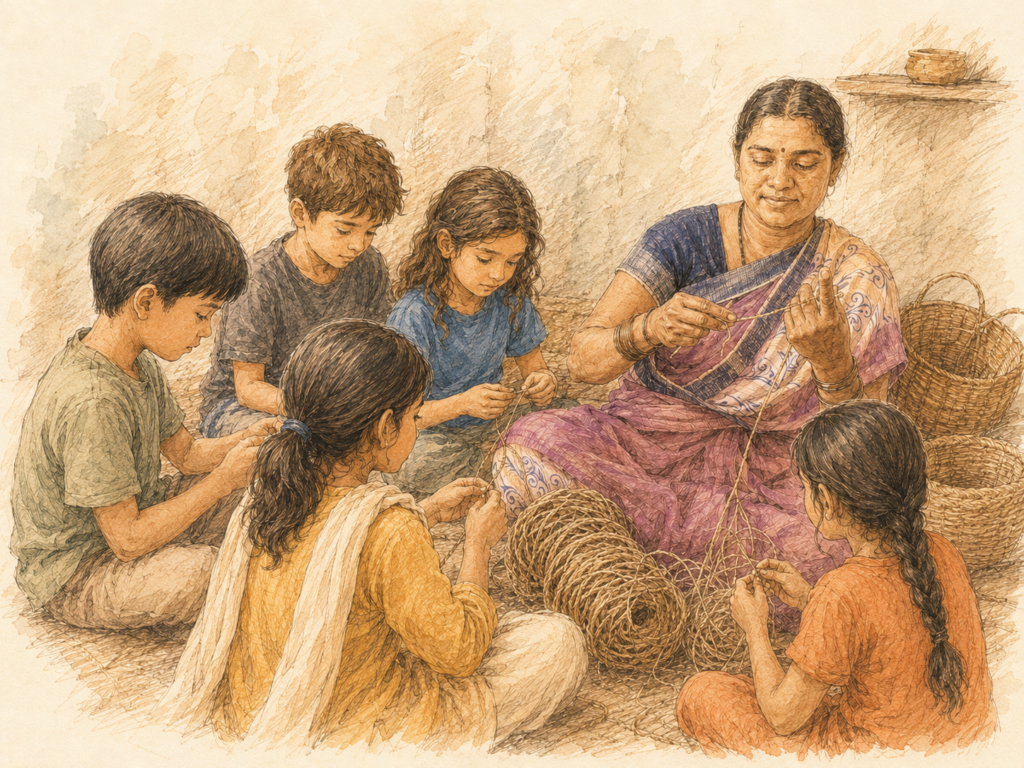
Students encounter food, craft, geography, stories, and local communities to see how the past continues into the present.
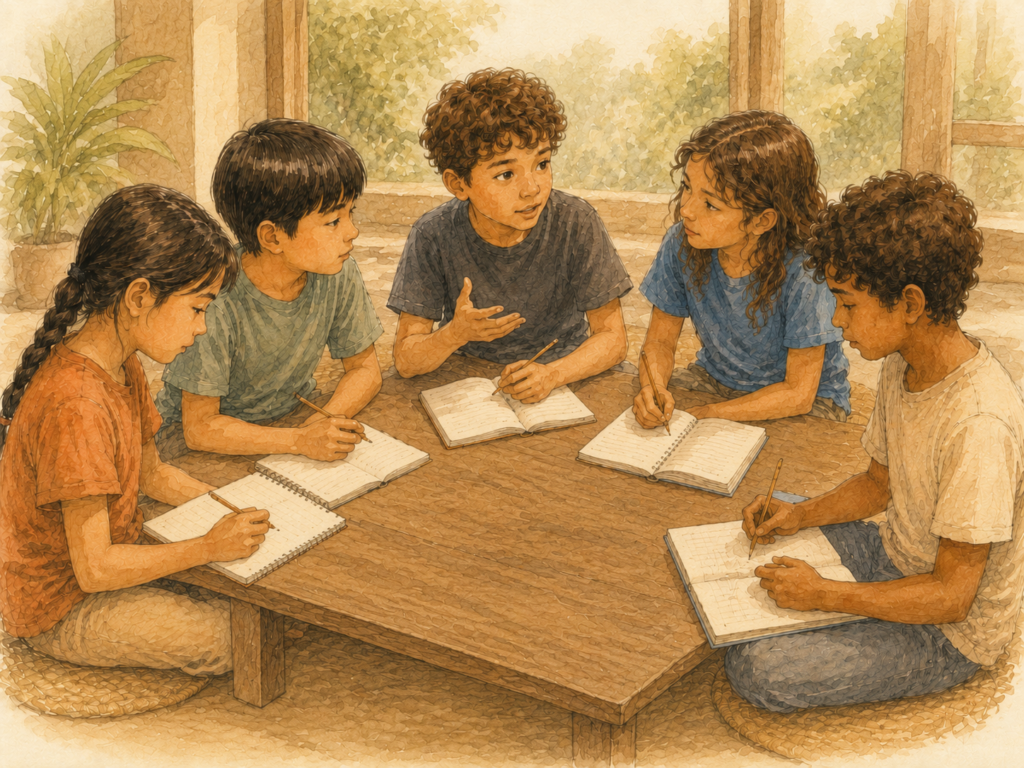
Students compare observations, discuss possibilities, and build interpretations from what they have seen, handled, and questioned.
The program builds both historical understanding and transferable inquiry skills. Students learn to see Hampi not only as a heritage site, but as a field of evidence through which they can study people, societies, landscapes, and the world around them.
Students understand the difference between history and archaeology, and how the human past is reconstructed through evidence, context, interpretation, and debate.
Students understand the difference between history and archaeology, and how the human past is reconstructed through evidence, context, interpretation, and debate.
Students begin to read Hampi as a medieval city shaped by geography, water, sacred spaces, trade, power, settlement, craft, and everyday life.
Students explore how the past continues into the present through culture, memory, identity, food, craft, and local practices, while understanding why heritage conservation matters.
Students practise careful observation, objective description, recording, sketching, mapping, measuring, and organising evidence.
Students learn to move from observation to inference, interpret artefacts and sites, and support ideas with evidence rather than assumption.
Students ask deeper questions, examine uncertainty, compare possibilities, and understand that complex historical questions may not have simple answers.
Students work in groups, debate interpretations, listen to different perspectives, and present their ideas clearly to others.
Along the way, students develop curiosity, respect for evidence, comfort with complexity, and a deeper relationship with place.
The Young Archaeologist is for schools that want students to use Hampi as a context for archaeology, historical thinking, and evidence-based interpretation. Students do not need to be studying Vijayanagara in class. The core learning is how we ask questions, work with evidence, and reconstruct the past.
Students use Hampi to understand how artefacts, sites, spaces, landscapes, and living traditions help us study earlier societies.
The program brings students into the methods of observation, recording, inference, and interpretation through structured field experiences.
The learning is not limited to Vijayanagara. Students practise ways of thinking that can be applied to any place, period, or society.
Students move through hands-on tasks, field observations, group discussion, and reflection rather than receiving a fixed monument narration.
Vijayanagara provides a rich setting, but the focus remains broader: how we question, examine, and reconstruct the past.
Content depth, inquiry tasks, reflection formats, and modules are shaped around your school’s age group, learning goals, and curriculum, including IB, Cambridge, ICSE, and CBSE.
The Young Archaeologist is our method-led program on archaeology, evidence, and historical thinking. We also curate Hampi programs with a stronger heritage or outdoor emphasis.