Students explore how culture is shaped by place, carried by people, and transformed across generations.
Culture is not fixed. Each generation inherits ways of living, believing, making and celebrating, then adapts them as circumstances change.
Some practices endure, some evolve, and some fade. What happens to them is shaped by the conditions people live in, the connections and institutions around them, and the choices people continue to make.
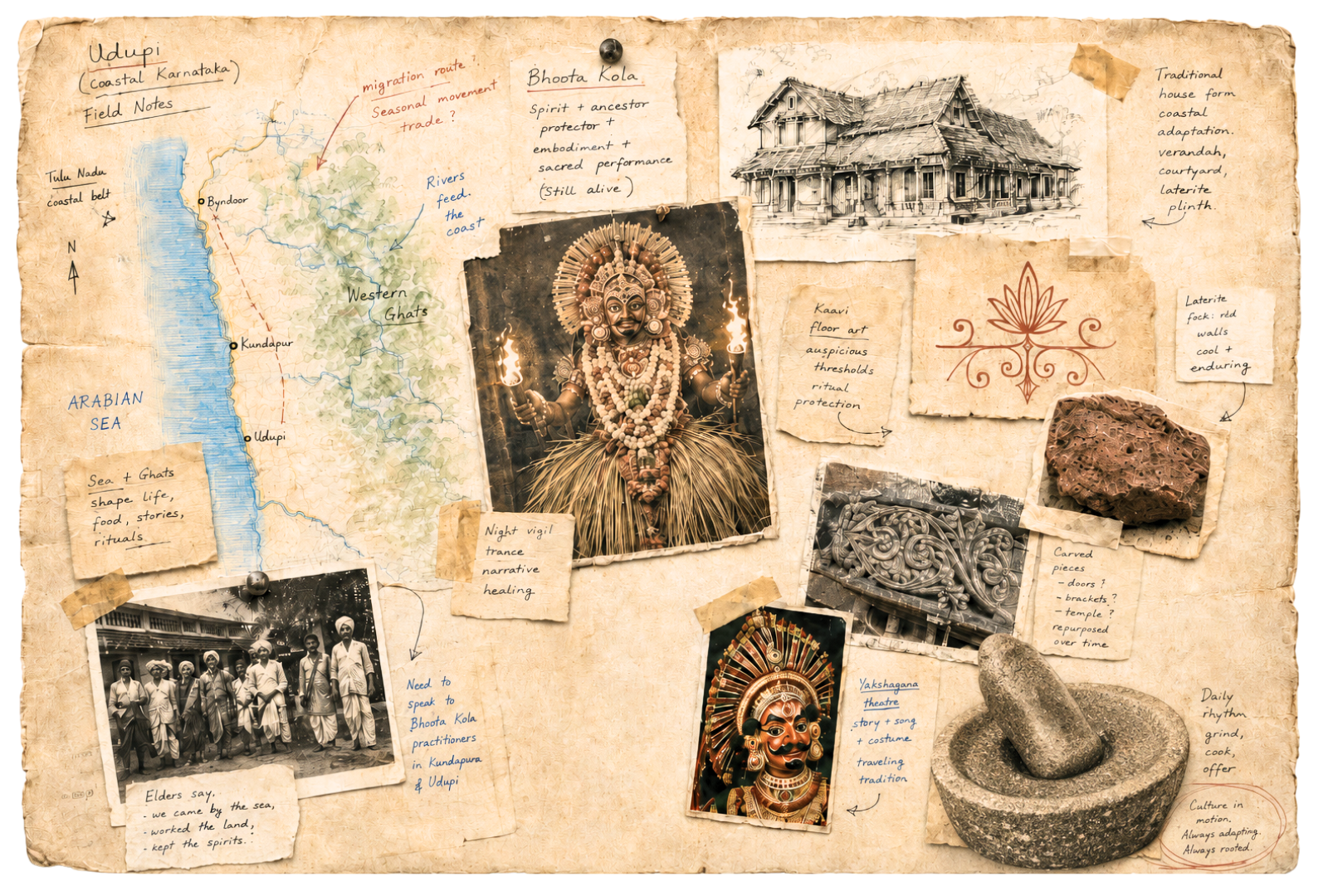
Geography, climate, resources, livelihoods and practical constraints influence how people build, work, eat and organise daily life.
Migration, trade, belief, power, patronage and institutions influence which practices emerge, spread and endure.
People adapt practices as needs, technologies and aspirations change. What survives depends on what people continue to value, practise and support.
Students explore Udupi through active, place-based experiences. They enter family homes and local shrines, walk through a living temple town, cook, make art, solve challenges, examine historic buildings and watch a live performance tradition.
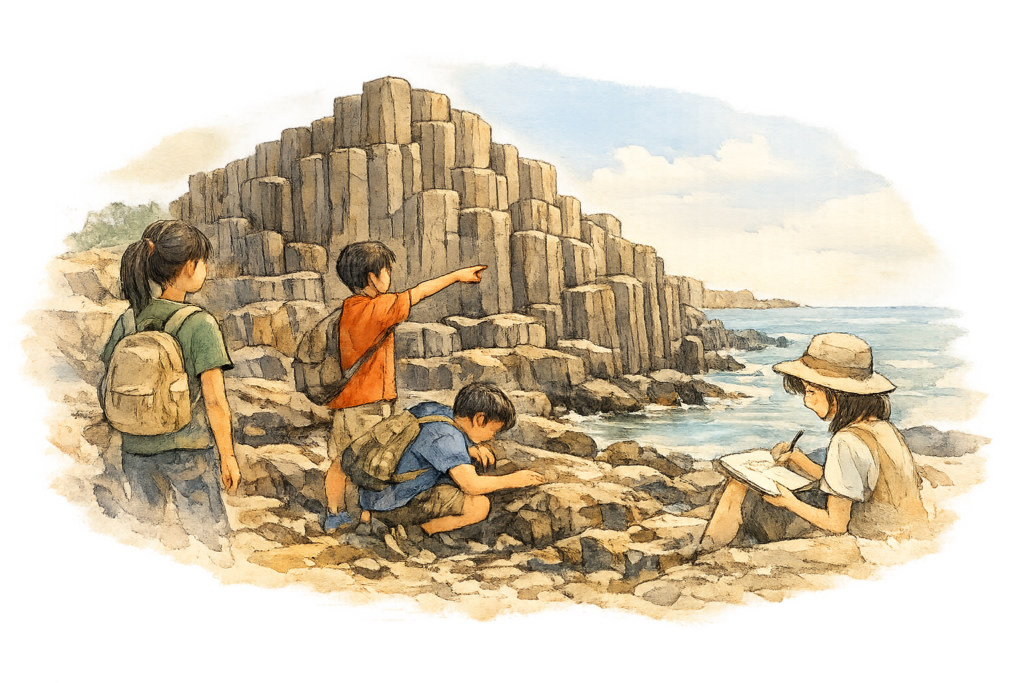
At St. Mary’s Island, students observe the island’s rock formations, shoreline and surrounding sea. They connect the Western Ghats, rivers, monsoons and Arabian Sea, and explore how geography has shaped movement, settlement and livelihoods along the coast.
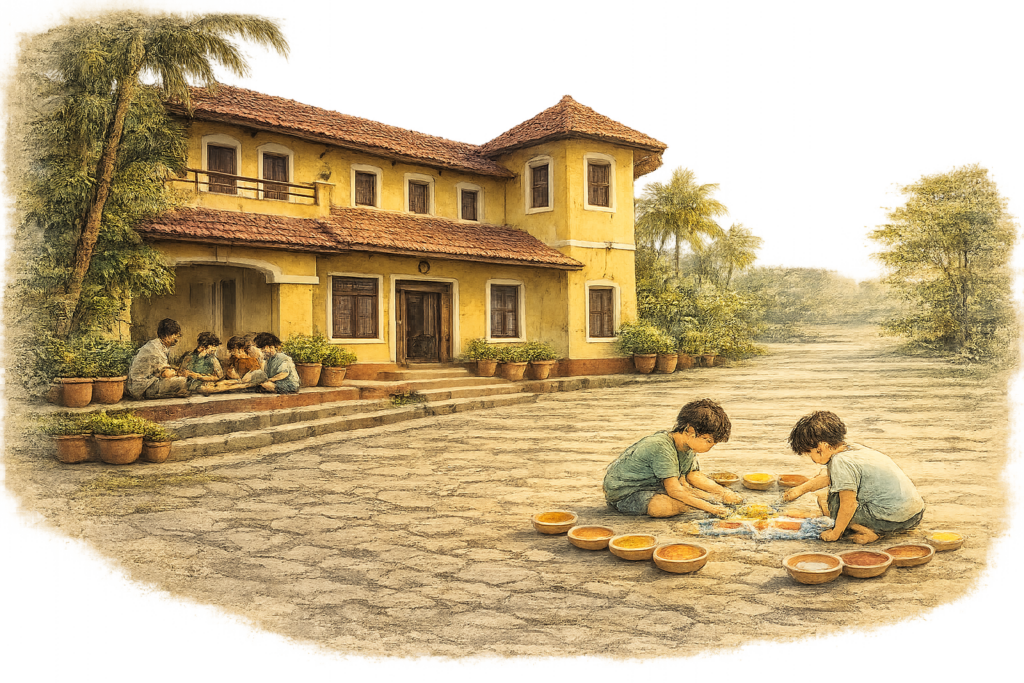
Students visit a neighbourhood Daiva shrine and spend time with a Gaud Saraswat family in a traditional Udupi home. They cook with local ingredients, examine household objects, draw water from a well, make rangoli and play traditional games. Through these experiences, they see how belief, family history, climate and everyday needs shape domestic life.
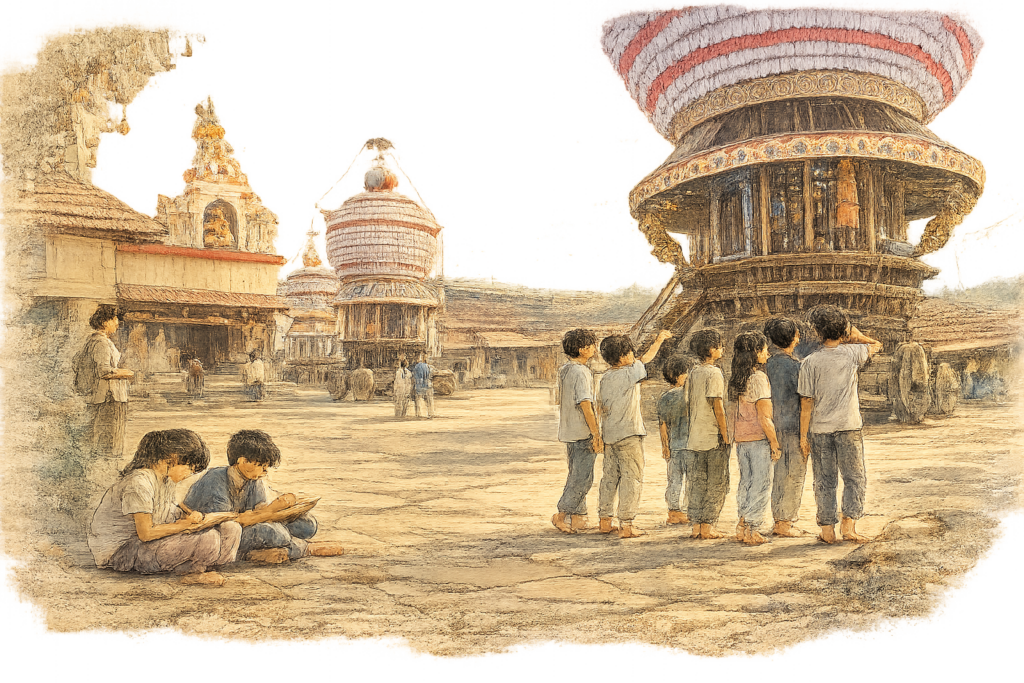
A guided walk through Ratha Beedi introduces students to the temple precinct, festivals, institutions and shared public life. In the Temple Economy Challenge, teams navigate the marketplace, manage a budget and investigate the livelihoods connected to the temple town. Together, the experiences reveal how belief, trade and institutions organise life around the temple.
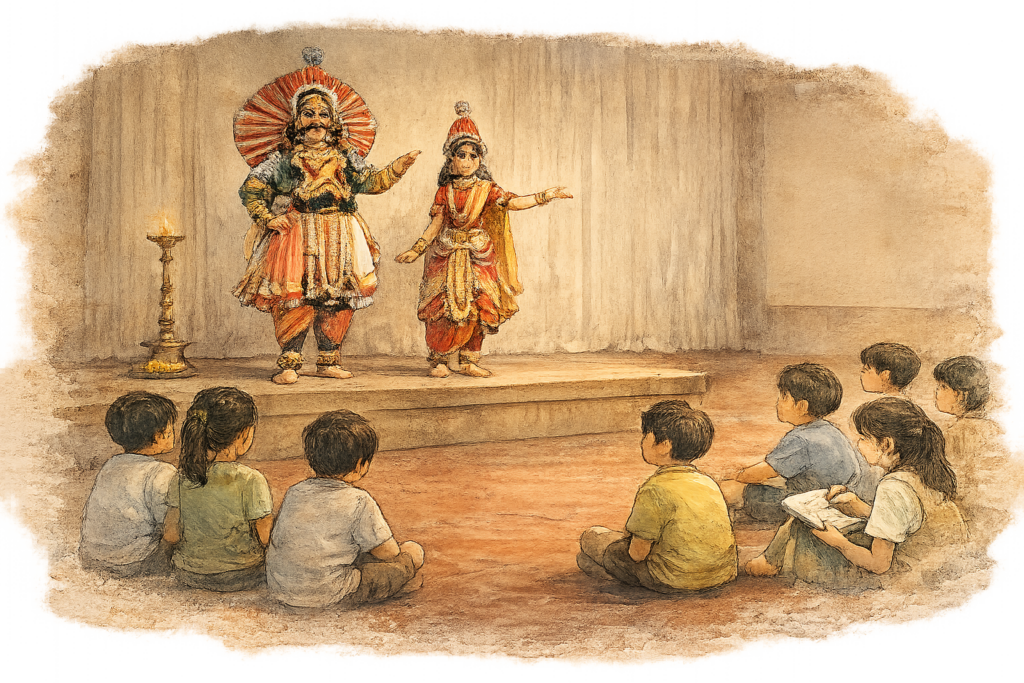
Students meet a Kaavi art practitioner and create a small work using the tradition’s materials and visual language. At Hasta Shilpa, they investigate historic homes and artefacts through a team scavenger hunt. A live Yakshagana performance brings together costume, music, movement and storytelling, showing how creative traditions are made, taught and carried forward.
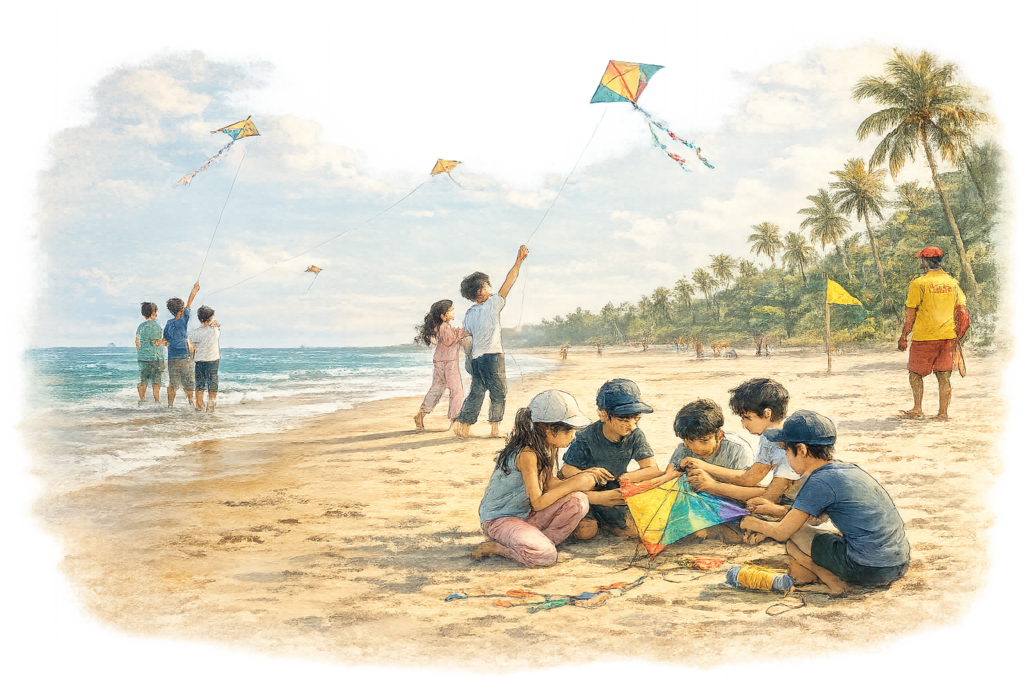
Students make and fly kites on the beach, enjoy supervised time by the sea and kayak through mangrove waterways. These lighter experiences create space for movement, play and a more personal connection with the coastal setting.
Students connect evidence across places, objects, stories, and lived encounters to build a layered understanding of culture and human societies.
Place, history, movement, belief, livelihoods, institutions and human choices interact to shape cultural life.
Practices change through contact, exchange, changing circumstances and the ways people adapt what they inherit.
Continued use, transmission, power, institutions and collective choices influence what survives, evolves or fades.
There is rarely one fixed or pure version of a cultural practice. Different forms may reflect different places, communities and moments in time.
Asking thoughtful questions and using direct encounters to build understanding.
Listening to different voices and interpreting practices within their social and historical context.
Linking evidence from different parts of the journey to identify wider relationships and patterns.
Weighing perspectives, recognising uncertainty, and forming considered interpretations without rushing to simple conclusions.
Students leave more attentive to context, more comfortable with complexity, and more thoughtful in how they interpret difference.
Culture in Motion is suited to schools looking for a thoughtful, interdisciplinary journey that goes beyond sightseeing. It works particularly well when the aim is to help students engage with unfamiliar communities, explore complex social questions, and connect classroom learning with lived experience
The program brings together geography, history, social studies, art, belief, economics, and contemporary life within one connected journey.
Students encounter communities and traditions with greater attentiveness, learning to approach unfamiliar practices with respect rather than quick judgement.
The journey combines inquiry and reflection with cooking, making, challenges, performance, movement, and recreation.
The program is well suited to schools that value dialogue, interpretation, and thoughtful engagement with questions that do not have simple answers.
The depth of inquiry, complexity of ideas, reflection formats and curriculum connections are adapted to the students’ age, prior learning and school context.